Odisha
BSE & CHSE
- BSE
- CHSE
- NEP
Odisha schools print them against the BSE and CHSE examination calendar, and a college wing on a semester structure draws from the same generator.
School ERP software in OdishaAn examination office should not be issuing them one candidate at a time, or checking a fee list by hand before it releases them. CampusTrue generates the cohort in one pass — photograph, roll number, papers, dates, room and seat — and a school running two boards issues each wing on its own schedule from one student record.
Last updated
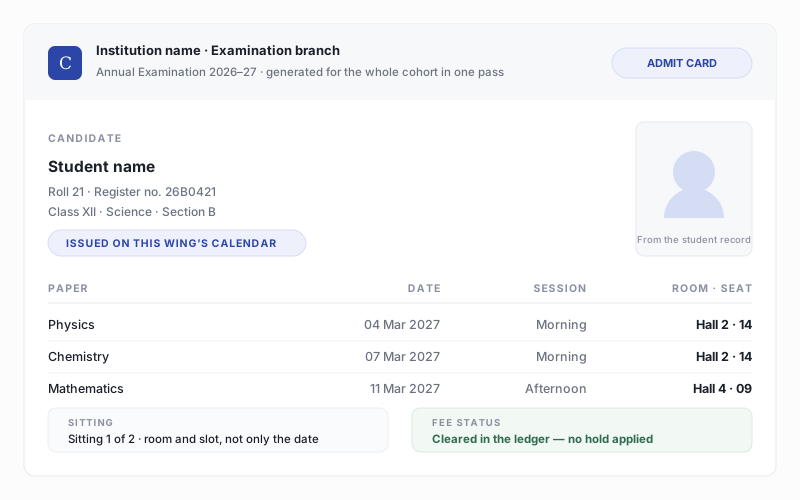
Student name
Roll 21 · Register 26B0421
Class XII · Science · Section B
Illustrative. Figures are sample data, not a customer’s record.
An admit card generator — a hall ticket generator, in much of India — issues examination admit cards for an entire cohort in one pass. That is bulk admit card generation: the office produces the whole cohort at once instead of preparing them one candidate at a time. Each card is assembled from records the institution already holds: the photograph and roll number on the student record, the papers that candidate is entered for, the dates those papers fall on in the examination calendar, and the room and seat allotted to them in the seating plan. The finished card reaches the candidate in the parent and student apps, and prints in bulk for families without a smartphone.
Because the card is generated rather than typed, two things follow that a manual process cannot offer. A school running two examination boards issues each wing against its own calendar from the same student record, so no candidate is handed a card for the wrong schedule. And where a school withholds cards over unpaid fees, the hold is applied by the fee ledger itself rather than by someone reading down a list of names.
Assembled from
Records the institution already holds. Nothing on the card is re-entered for the examination.
Scheduling, seating and issuing are one workflow rather than three lists that have to agree with each other afterwards.
Papers are placed across the examination window against the calendar the wing follows, without clashing a candidate's own subjects.
Seating is generated across the rooms and halls the institution actually has, on the arrangement the examination requires — alternate rows by class, mixed sections, or a fixed roll sequence.
Cards generate for the whole cohort in one pass. Parents download in the app; the office prints in bulk for families without a smartphone. Unpaid-fee holds apply from the ledger automatically.
The awkward year is the one where a school runs two boards at once. Two calendars, two register-number formats, one student record.
Two calendars, one record
Each wing generates on its own dates from the same student record. A candidate entered on one calendar cannot be issued a card for the other.
Odisha
Odisha schools print them against the BSE and CHSE examination calendar, and a college wing on a semester structure draws from the same generator.
School ERP software in OdishaMaharashtra
Generated against the MSBSHSE calendar, and separately against the CBSE one where a school runs both wings in the same year.
School ERP software in MaharashtraKarnataka
The school wing and the PU wing draw from the same generator on two different examination calendars.
School ERP software in KarnatakaOfficial sources
And the fee hold
Where fees are outstanding, the ledger applies the hold rather than the office checking each name by hand — and a payment that clears in the morning releases the card without anyone reconciling two lists.
A card that names a seat is only as good as the plan behind it. The plan the candidate's card is printed from is the plan the invigilator works from.
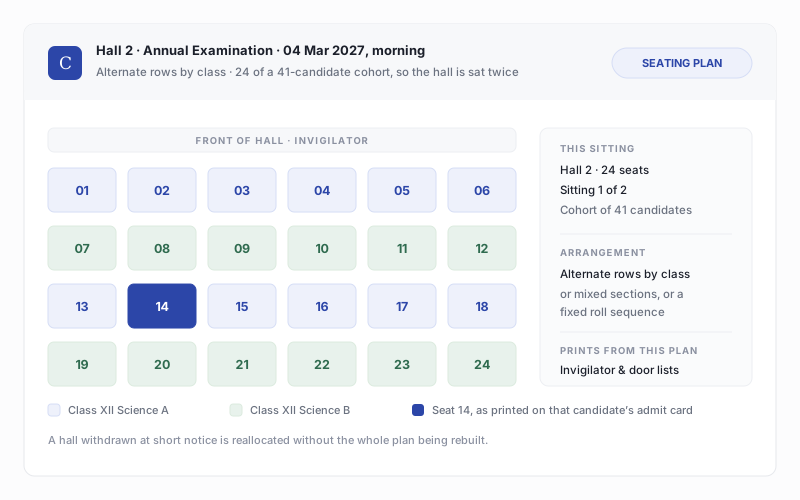
Seating is generated across the rooms and halls the institution actually has, not an idealised block of identical rooms. The arrangement is the examination’s to choose — alternate rows by class, mixed sections, or a fixed roll sequence where the board prescribes one — and the generator lays out the hall to match rather than asking the office to fit the examination to the software. A hall withdrawn at short notice is reallocated without the whole plan being rebuilt.
The candidate’s admit card, the invigilator list and the door-wise attendance sheet all print from the same allocation. Where those three are maintained as separate lists, they disagree the moment one of them is edited — and the disagreement surfaces on the morning of a paper, at the door, with a candidate standing in it. Where a hall seats fewer candidates than the cohort, cards are issued per sitting and carry the room and slot rather than only the date. The same plan carries forward into mark entry and result computation, which sit beside admit cards in the examination module.
What examination offices ask before moving admit card issue onto a platform. Anything not covered here, our team answers within 24 hours.
They are generated for a cohort in one pass rather than one candidate at a time. Each card carries the student's photograph, roll number, the papers they are actually sitting with their dates, and the room and seat allotted from the same plan the examination office built. Parents download the card in the app, and the office prints in bulk for families without a smartphone, so no candidate depends on having one.
Yes. A school that withholds them over unpaid fees can have the fee ledger apply that hold automatically rather than checking each name by hand. The hold reads the same ledger the fee desk works from, so a payment that clears in the morning releases the card without anyone reconciling two lists.
Yes, and this is the case the generator is built around. A school running an MSBSHSE wing beside a CBSE one, or a KSEEB wing beside a Pre-University one, is working to two examination calendars in the same year. Each wing generates its own on its own dates, from one student record, so a candidate is never issued against the wrong schedule. An autonomous college issuing on its own semester schedule draws from the same generator as the junior college wing following the state calendar.
Yes. Where a hall seats fewer candidates than the cohort, cards are issued per sitting and carry the room and slot rather than only the date. Seating is generated across the rooms and halls the school actually has, on the arrangement the examination requires — alternate rows by class, mixed sections, or a fixed roll sequence — and the invigilator list and door-wise attendance sheet print from that same plan. A hall withdrawn at short notice is reallocated without the whole plan being rebuilt.
No. Admit cards and hall tickets are part of the examination module, alongside scheduling, seating, marks entry, result computation and report cards. CampusTrue is quoted per institution against student count and the modules you switch on, with data migration and staff training included in onboarding rather than quoted later. Request a free demo and our team sends a written proposal within 24 working hours.
Send us your board, your wings and your student count, and we will show the cohort generated on a configuration that looks like yours — then follow up with a written proposal.
No card details. A written proposal within 24 working hours.
Institutions outside these locations are supported remotely from our Bhubaneswar engineering office. Ask us about your state.