Every campus software vendor now has an AI page, and most of them describe the same three things: dropout prediction, a chatbot, and timetable generation. Two of those are useful. One of them is usually a demo feature that nobody switches on in the second term.
This is an attempt to sort the category honestly, including where our own product's limits are. The useful question is not whether a system has AI. It is which specific task the AI removes, and what happens when it is wrong.
Start with the work, not the technology
Administrative work in an institution divides into three kinds. Judgment — deciding whether to grant a fee concession. Coordination — getting the right notice to the right parents. And reconciliation — making two records agree.
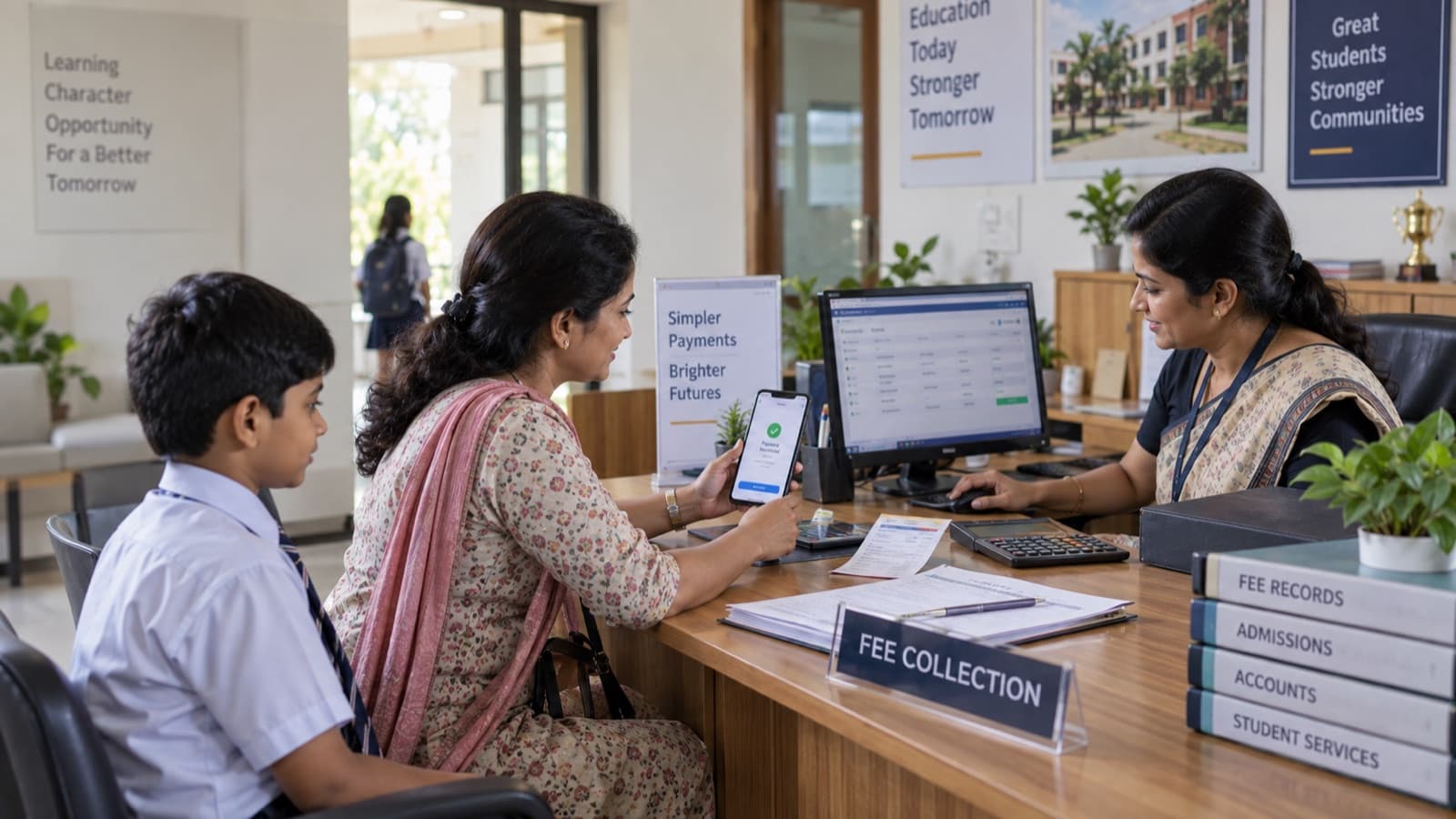
Reconciliation is where automation pays, because it is high-volume, rule-governed and completely joyless. It is also the work least likely to appear in a vendor demo, because watching a system match gateway settlements against invoices is not a compelling five minutes.
The best automation in campus software is invisible. It removes the work nobody was proud of doing in the first place.
Which AI features in school software actually work?
Four categories have earned their place, in roughly descending order of how confident an institution can be about them.
- 1Constraint solving for timetables. Building a schedule against teacher availability, room capacity and subject load is a well-understood optimisation problem. It is not really machine learning, and vendors who call it AI are stretching — but it works, it is verifiable, and it saves a week of somebody's life every session.
- 2Anomaly surfacing in attendance. Not predicting dropout — simply flagging the students whose pattern changed. A student who attended reliably and then stopped is a different signal from one who was always irregular, and a system that surfaces only the change gives a counsellor a list they can actually work through.
- 3Reconciliation and matching. Payment settlements against invoices, duplicate student records, documents against application checklists. Rule-based with a confidence threshold, escalating the uncertain cases to a person.
- 4Drafting, not sending. Generating the first version of a circular, a report comment or a reminder, then waiting for approval. The time saved is real and the risk is bounded, because a human still signs off.
Is AI dropout prediction worth it?
Dropout prediction is the headline feature of this category and the one most often quietly disabled. The reason is not that the models are bad. It is that a prediction is worth nothing unless someone acts on it, and most institutions have no spare capacity to act.
A model that flags forty at-risk students to a counsellor who can meaningfully see six has not helped. It has generated a list that makes the institution feel worse without changing an outcome. If you are evaluating this feature, ask the vendor what happens after the flag — and if the answer is a dashboard, the feature ends at the dashboard.
General-purpose chatbots on student data are the second category to be sceptical about. The failure mode is not that the bot is unhelpful; it is that it is confidently wrong about a fee balance or an examination date, and the parent believes it. Anything that answers questions about a specific student's record needs to read from the record and cite it, not summarise it from memory.
Prediction that reduces work rather than creating it
There is a version of prediction worth having, and it is the unglamorous one: forecasting which fee instalments will be late. This lets finance send reminders to twenty families instead of six hundred.
The difference from dropout prediction is that the action is cheap and already resourced. Nobody needs new capacity to send a targeted reminder. The prediction shrinks an existing task rather than proposing a new one, and that is the shape of automation that survives contact with a real academic year.
Keeping a person where the judgment is
A working rule: automation belongs on the preparation, never on the decision. Anything that changes a student record, a grade, a fee or a permission should have a human decision point in front of it.
- Draft the communication; let a person send it
- Compute the result; let the examination office release it
- Flag the anomaly; let a teacher decide what it means
- Match the payment; escalate the ones below the confidence threshold
- Propose the timetable; let the coordinator adjust and approve it
This is not caution for its own sake. It is what makes the system auditable. When a mark changes, someone needs to be able to answer who changed it and why — and 'the model did' is not an answer that survives a parent complaint or an inspection.
The data question underneath all of it
Every AI feature in this category runs on student data, which in India is governed by the Digital Personal Data Protection Act, 2023. Three questions are worth asking any vendor before enabling anything.
- 1Does student data leave the platform to reach a model provider? If so, which one, under what agreement, and can we decline?
- 2Is our institution's data used to train anything that serves other customers?
- 3Can we switch a specific automation off without disabling the module it lives in?
The third is the practical one. Institutions routinely want the attendance anomaly flags and not the predictive scoring, or the draft generation and not the chatbot. A system that bundles them into a single toggle is asking you to accept its judgment about your risk appetite.
How to evaluate a claim
When a vendor demonstrates an AI feature, four questions establish whether it is a product or a screenshot.
- 1Which specific task does this remove, and how many hours per term does that task currently take us?
- 2What happens when it is wrong — who is notified, and can it be reversed?
- 3What is the confidence threshold, and can we set it?
- 4Show me the same feature running on our data, not the demo institution's.
The fourth question is the one that separates most vendors. Sample data is curated to make the model look good. Your data has the duplicate student records, the mid-term section changes and the fee concession that was agreed verbally in 2024.
Where we are, plainly
CampusTrue's automation today is in the first and third categories above: constraint-based timetabling that reports clashes during planning rather than in week one, attendance analytics that surface pattern changes rather than scoring students, and reconciliation that posts payments against the right fee head without a manual entry. Drafting assistance and richer forecasting are directions we think are defensible; they are not claims about what ships today.
We would rather state that boundary than describe a roadmap as a feature list. If you are comparing vendors on AI, that is the distinction worth insisting on from all of them: what runs in production this term, and what is a direction of travel.
- ai in education
- ai school management software
- artificial intelligence campus management
- education ai india
- ai student information system
- automation school erp